The Suzuki Jimny is one of the slowest-depreciating vehicles you can buy in South Africa. A used 4th-generation 1.5 (JB74 3-door or JC74 5-door) typically asks between roughly R250,000 and R460,000+ — and clean, low-kilometre 3-doors frequently ask close to what they cost brand new. Across the whole used Jimny market (3rd-gen 1.3 included), asking prices span roughly R79,900 to R729,000 across around 600 active AutoTrader listings. The reason is simple: demand chronically outruns supply. All figures here are asking prices aggregated daily as listings come in — not final transaction prices.
Why the Jimny holds its price
Most cars lose a chunk of value the moment they leave the dealership. The Jimny barely does. Three forces work together to keep its resale unusually firm:
- Chronic supply shortage and waiting lists. Suzuki SA sells only around 310–330 Jimnys a month, and demand has consistently outstripped that. When the 5-door launched in late 2023, waiting lists reportedly stretched as long as 22 months. If a buyer can either wait the better part of two years for a new one or pay near-new money for a clean used example today, many choose to buy used — and that bids used prices up.
- Cult demand and owner loyalty. The Jimny has a genuine lifestyle following in SA, not just a customer base. The community is large and active — the 2025 Jimny Gathering drew 1,127 vehicles and set a Guinness record — and that kind of engagement keeps demand deep and resale firm. Owners tend to keep their Jimnys and upgrade within the family rather than switch brands.
- It is the cheapest real ladder-frame 4x4 you can buy new. Nothing else offers a genuine part-time 4x4 with low range, a separate chassis and 210 mm of ground clearance at the Jimny’s price. That structural scarcity in the new market flows directly into strong used residuals.
The 3-door holds value best — and the Suzuki-brand nuance
There is an important nuance worth stating plainly, because it is where most general advice gets the Jimny wrong.
At a brand level, Suzuki’s first-year value retention has historically been weaker than some rivals across its wider range. If you read a generic “which brands hold value” table, Suzuki may not top it. But brand-wide figures do not describe how a 3-door Jimny (JB74) behaves on the used market — and the 3-door is the exception that breaks the rule.
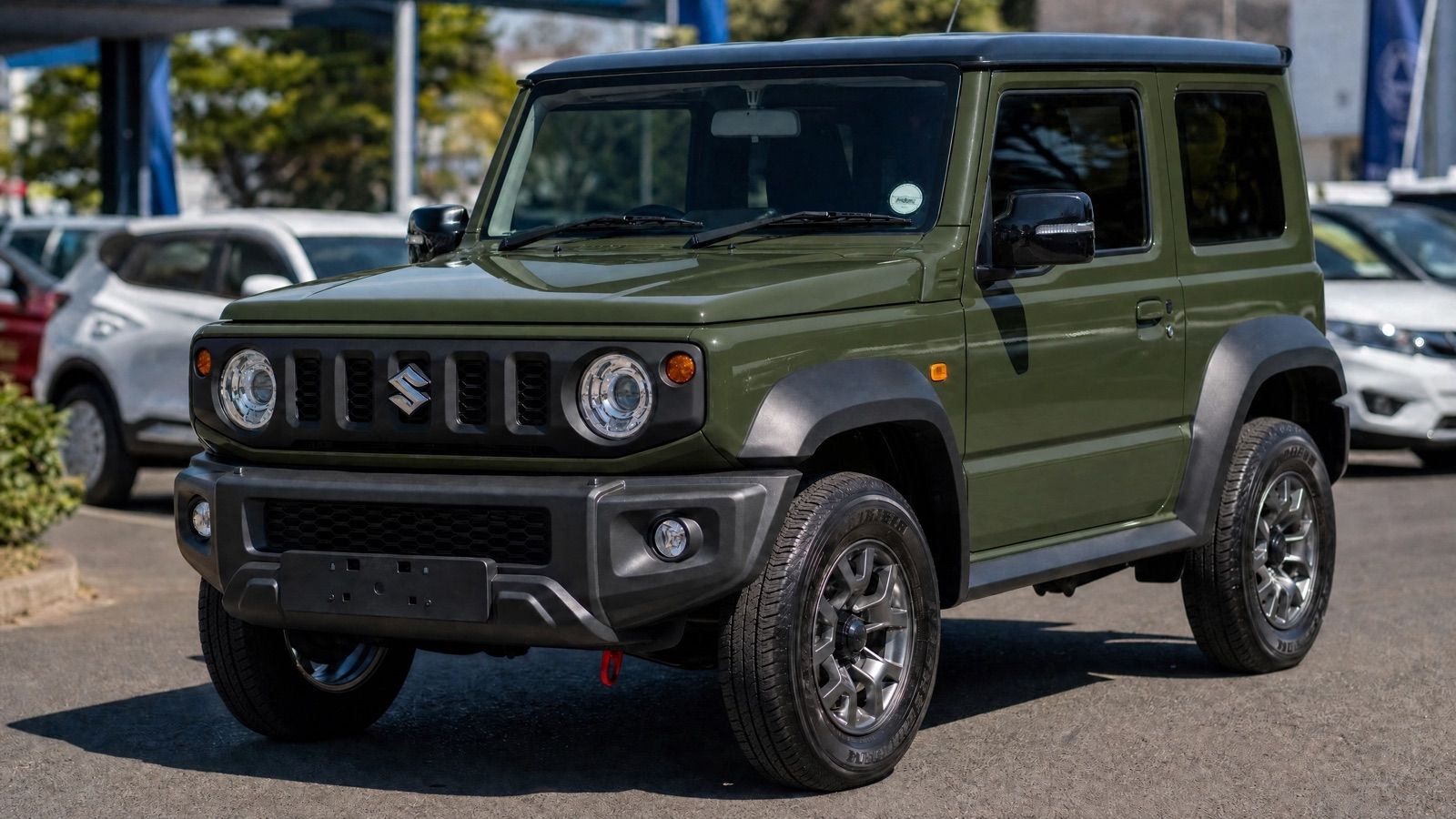
The 3-door is the iconic, Japan-built shape with the longest waiting lists and the deepest cult following. It is the Jimny people picture when they think “Jimny,” and scarcity keeps its residuals exceptionally strong — clean examples routinely ask close to new-car money. The 5-door (JC74) also holds up well on scarcity, but it is newer, India-built, and will become more plentiful over time, so it does not yet carry the same near-mythical residual reputation as the 3-door. If your single priority is value retention, the 3-door is the stronger bet.
What the asking-price bands tell you
Here is how used Jimny asking prices broadly map out. Treat these as aggregated asking-price bands, not fixed valuations:
| Asking-price band | What it typically represents |
|---|---|
| ≈ R120,000 – R250,000 | 3rd-gen 1.3 (JB43, ~2008–2018) — older, but a firm and steady classic |
| ≈ R250,000 – R350,000 | Earlier or higher-mileage 4th-gen 1.5, lower trims |
| ≈ R350,000 – R460,000+ | Clean, lower-kilometre 4th-gen 1.5 GLX; strong 3-doors near new money |
The headline is the narrowness of the gap between new and used at the top end. A new 2026 3-door GLX is R444,900 (manual) / R466,900 (auto), and the 5-door GL/GLX runs ≈ R439,900 to R489,900 — yet well-kept used 1.5 examples ask right up against those numbers. That compression is the depreciation story in one line: the Jimny gives back very little.
What protects (and erodes) your Jimny’s value
If you own one and want to maximise resale, the levers are the obvious ones — but they matter more on a Jimny than on most cars, because buyers are discerning and supply of clean examples is what they are paying a premium for:
- Keep the service history complete. A stamped Suzuki service book is the single biggest protector of resale value. Patchy history is the fastest way to drop below the band.
- Keep mileage and condition sensible. Scarcity rewards clean, honest, low-to-moderate-kilometre cars. That is exactly the profile that holds its price.
- Be careful with modifications. Tasteful, reversible accessories are fine; heavy or poorly executed builds can narrow your buyer pool. Cosmetic-only kits such as the Rhino decal add almost nothing to value — treat them as personalisation, not investment.
How to check what your Jimny is worth
Start with a benchmark. The free, spec-aware Jimny valuation tool accounts for the things that actually move the price — generation (1.3 vs 1.5), body (3-door vs 5-door), trim (GA/GL/GLX) and transmission — and compares your Jimny against aggregated asking prices updated daily. It gives you a realistic asking range to anchor a sale or trade-in.
From there, sense-check it against the wider market: the live Jimny market data page and current Jimny listings show what comparable cars are actually being advertised at right now. If you are choosing between body styles before you buy, the 3-door vs 5-door guide walks through the trade-offs that also shape long-term resale.
The bottom line
The Suzuki Jimny holds its price in South Africa better than almost anything in its class, and the 3-door specifically is the standout — chronic supply shortage, waiting lists and a cult following keep used 1.5 asking prices firmly in the R250,000–R460,000+ range, often close to new money. The brand-level “weak Suzuki resale” reputation does not apply to the 3-door. Buy clean, keep the history stamped, and check your number against the valuation tool — but remember these are asking prices aggregated daily across platforms, and the figure you actually achieve is yours to negotiate.